
NFPA 10 Fire Extinguisher Inspection Requirements: Monthly, Annual, and Long-Term Checks
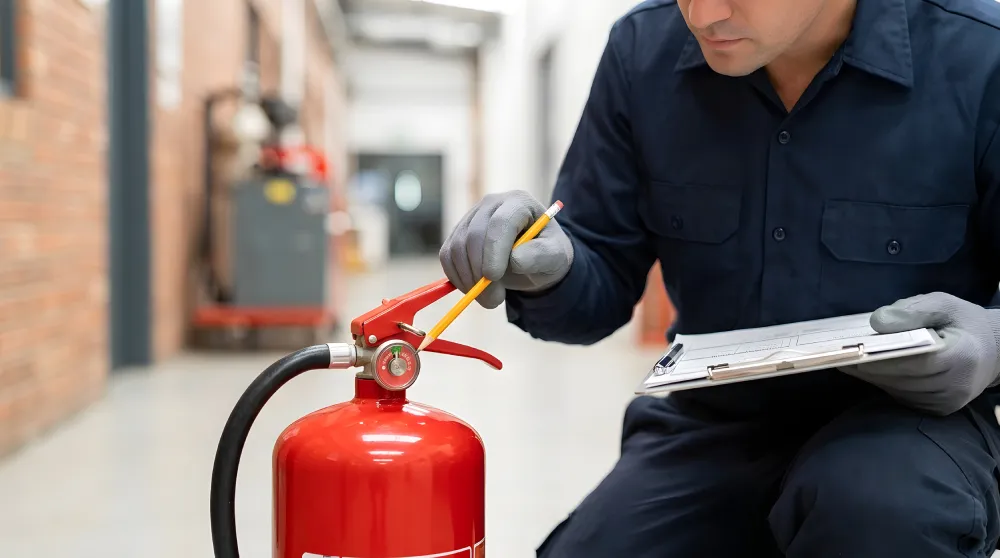
NFPA 10 requires a fire extinguisher inspection every month, a maintenance inspection every year, and deeper service at six and twelve years for many types. Missing any interval can leave extinguishers unreliable and facilities out of compliance. This guide explains each interval for businesses in Central and Eastern Pennsylvania and Western Maryland, what inspectors look for, and what happens when a facility falls behind.
Key Takeaways
- NFPA 10 requires a monthly visual check, a yearly maintenance inspection, and periodic six-year and twelve-year service for many extinguishers.
- Employees can perform monthly checks, but annual maintenance needs a qualified person who documents the work on an attached tag.
- Missing tags, blocked access, low pressure, and overdue service are common findings that can cause a failed fire marshal inspection.
- Written records and service scheduled before winter help Pennsylvania and Maryland facilities stay compliant and ready for fire marshal visits.
What Each NFPA 10 Inspection Interval Requires
NFPA 10 establishes inspection, maintenance, and testing requirements for portable fire extinguishers. These requirements follow different schedules, from monthly visual checks to annual maintenance and periodic internal examinations and pressure testing.
Understanding what each interval requires helps commercial property managers keep extinguishers accessible, properly maintained, and ready for use.
Monthly Visual Inspections Require Checking Accessibility and Condition
NFPA 10 calls for visual inspections at approximately 30-day intervals. During these checks, trained personnel confirm that each fire extinguisher is in its designated location, clearly visible, and accessible without obstructions.
They also check the pressure gauge, operating pin, tamper seal, and visible condition of the extinguisher. Any signs of damage, leakage, or other problems should be reported so corrective action can be taken.
Monthly inspections can generally be completed by appropriately instructed facility staff, but they do not replace professional maintenance.
Annual Maintenance Requires a Thorough Examination by a Qualified Professional
NFPA 10 requires portable fire extinguishers to undergo maintenance at least once a year. This examination is more detailed than a monthly visual inspection and must be performed by qualified personnel.
Annual maintenance includes evaluating the extinguisher’s mechanical components, extinguishing agent, and expelling means, as applicable. The technician also examines components such as the hose, nozzle, cylinder, and operating mechanism.
Commercial facilities can arrange annual fire extinguisher service through Liberty Fire Solutions to support their ongoing fire protection maintenance needs.
Six-Year Maintenance Requires Internal Examination of Certain Dry Chemical Extinguishers
NFPA 10 requires six-year internal maintenance for applicable stored-pressure extinguishers, including many common rechargeable dry chemical models.
During this service, a qualified technician removes the extinguishing agent, examines internal components, and completes the required maintenance before returning the extinguisher to service.
This examination helps identify internal problems that may not be visible during monthly inspections or routine external checks.
Hydrostatic Testing Requires Pressure Testing at Five-Year or Twelve-Year Intervals
NFPA 10 establishes hydrostatic testing intervals based on the extinguisher’s type and construction.
Many stored-pressure dry chemical extinguishers require hydrostatic testing every 12 years. Certain other extinguisher types, including carbon dioxide and wet chemical models, generally require testing every five years.
Hydrostatic testing evaluates whether the extinguisher cylinder can safely withstand the required test pressure. Cylinders that fail testing must be removed from service.
Routine Inspections Require Checking Each Extinguisher for Visible Problems
In addition to following the required maintenance schedule, facility personnel should check each extinguisher for conditions that could interfere with its use.
These checks include confirming that the extinguisher is accessible, properly positioned, and free from visible damage. Inspectors should also look for missing seals, abnormal gauge readings, corrosion, leakage, and obstructed discharge components.
In commercial warehouses, offices, and older industrial buildings, stored materials and changes to facility layouts can affect extinguisher accessibility. Identifying these issues during routine inspections helps maintain a safer workplace.
Inspection and Maintenance Records Require Proper Documentation
NFPA 10 includes documentation requirements for inspections, maintenance, and testing.
Monthly inspection records should identify when the inspection was performed and who completed it, using an accepted recording method. Annual maintenance is documented separately, typically through a service tag or label.
Six-year maintenance and hydrostatic testing also require appropriate records or markings. These records help facility managers track service history and provide documentation when requested by the authority having jurisdiction (AHJ).
Key Steps for Managing Pennsylvania Extinguisher Compliance
Compliance comes from a repeatable process, not a once-a-year scramble. Facilities in Pennsylvania and Maryland answer to local fire marshals, who enforce adopted codes and NFPA 10. The steps below help commercial teams keep every unit documented and ready.
Assign Qualified Personnel to Fire Extinguisher Inspections
Start by identifying who is responsible for each type of inspection. Appropriately instructed facility staff can perform monthly visual checks, while annual maintenance, six-year internal examinations, and hydrostatic testing require qualified personnel with the necessary training and equipment.
Technician qualification requirements may vary by jurisdiction. Confirm applicable requirements with your local fire marshal or AHJ before selecting a provider.
Schedule Professional Fire Extinguisher Inspections and Maintenance
Create an inventory that identifies every fire extinguisher, its type, location, and maintenance history. Use this information to establish a service schedule and identify units approaching their required maintenance dates.
For facilities with multiple extinguishers, coordinating service visits can reduce operational disruption. Multi-location businesses and property managers may also benefit from consistent scheduling and centralized documentation.
Budget for Fire Extinguisher Inspection and Maintenance Costs
Include routine inspections, annual maintenance, and periodic testing in the facility’s fire protection budget.
The cost of fire extinguisher inspection and maintenance depends on the number and types of extinguishers, their condition, and the services required. Recharging, six-year maintenance, hydrostatic testing, and replacement may involve additional costs.
Complete and Document Monthly Fire Extinguisher Inspections
Establish a monthly inspection routine that covers every portable fire extinguisher in the building.
During each visual check, confirm that the extinguisher is in its designated location, accessible, and free from obvious damage. Check the pressure gauge where applicable, operating pin, tamper seal, and other visible components.
Record the inspection date and the person responsible using an accepted documentation method. Consistent records help demonstrate that inspections have been completed and make it easier to identify recurring problems.
Correct Fire Extinguisher Compliance Issues Promptly
Address missing extinguishers, blocked access, damaged equipment, and overdue maintenance as soon as they are identified.
Unresolved deficiencies can result in corrective-action requirements or enforcement measures from the local AHJ. More importantly, an extinguisher that is damaged, inaccessible, or improperly maintained may not operate as intended during an emergency.
Keep records of corrective actions and arrange qualified service when an extinguisher requires maintenance, testing, or replacement.
Verify OSHA, NFPA 10, and Local Fire Code Requirements
Review all applicable fire extinguisher requirements rather than relying on a single inspection schedule.
For covered employers, OSHA’s portable fire extinguisher standard establishes requirements that include monthly visual inspections and annual maintenance checks. NFPA 10 provides additional requirements for portable fire extinguisher inspection, maintenance, and testing.
Local fire codes and AHJ requirements may also apply. Review these obligations together and update the facility’s inspection schedule when necessary.
Schedule Your Fire Extinguisher Inspection Before Winter
Liberty Fire Solutions provides inspection, repair, and installation for fire extinguishers, along with other fire protection systems. For more than 40 years, Liberty has served businesses across Central/Eastern Pennsylvania and Western Maryland. A fire safety specialist can help you stay compliant and keep every extinguisher documented.
Contact us to request a quote or schedule an inspection.
Frequently Asked Questions
How often is a fire extinguisher required to be inspected?
NFPA 10 requires a visual inspection about every 30 days and a full maintenance inspection once a year. Six-year maintenance and 12-year hydrostatic testing also apply to stored-pressure dry chemical extinguishers.
Who can perform a fire extinguisher inspection?
Trained facility staff can handle monthly checks. Annual maintenance, six-year service, and hydrostatic testing require a qualified person. Confirm local requirements with your fire marshal, and choose a provider that documents every visit on the tag.
What does a fire extinguisher inspection checklist include?
A checklist covers location, clear access, gauge pressure, pin and tamper seal, hose and nozzle condition, and visible damage or corrosion. It also confirms the tag is legible and the service dates are current.
How long does a fire extinguisher last before replacement?
Lifespan depends on type, condition, and manufacturer guidance. Stored-pressure dry chemical units need hydrostatic testing at 12 years, and failed or heavily corroded cylinders must be replaced. A qualified technician can evaluate older extinguishers during annual service.
Category: Fire Extinguishers Let us help.
Fill out the form and a Liberty fire safety specialist will contact you within 24 hours.