
Why Class D Fire Extinguishers Are Essential for Metal Fire Hazards in Pennsylvania Workplaces
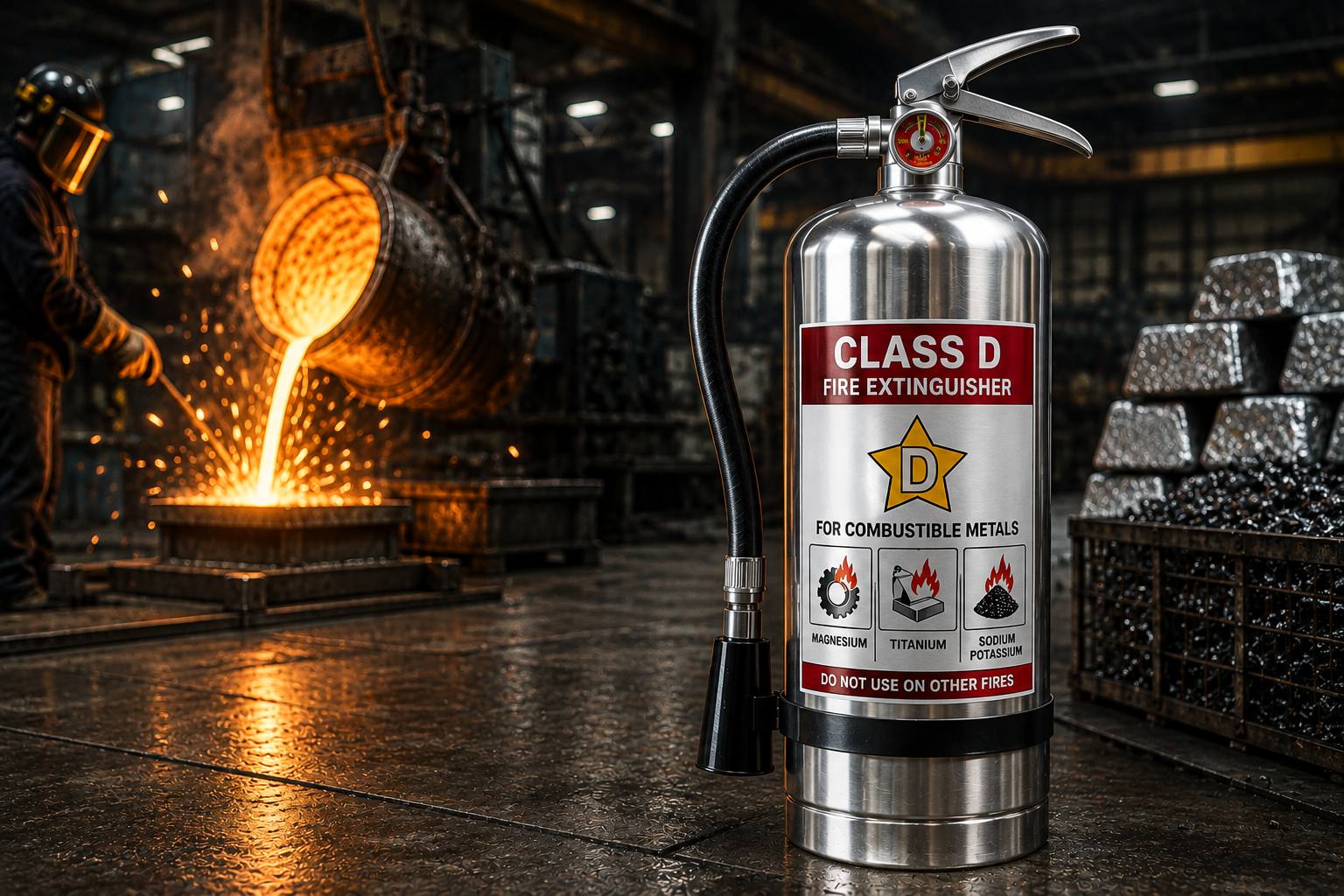
A class D fire involves burning metals like magnesium, titanium, sodium, or lithium. These fires burn hotter than typical fires and react violently to water. Businesses across Central and Eastern Pennsylvania and Western Maryland that machine, store, or process metals face this risk daily. Understanding what a class D fire extinguisher is used for helps facility managers protect workers and property.
Key Takeaways
- Class D fires involve combustible metals such as magnesium, titanium, sodium, and lithium reacting violently to water.
- Class D fire extinguishers use dry powder agents that smother metal fires without triggering dangerous chemical reactions.
- Standard class A, B, or C extinguishers can worsen metal fires instead of putting them out safely.
- Manufacturing, automotive, and lab facilities in Pennsylvania and Maryland should evaluate their class D extinguisher needs.
How Class D Extinguishers Prevent Dangerous Metal Fire Escalation
Class D extinguishers use specialized dry powder agents built for one job: smothering burning metal. Unlike water or foam, these agents do not react chemically with the fuel source. That distinction is what keeps a small metal fire from becoming a much larger, harder-to-control event.
What Makes Metal Fires Different From Other Fire Classes
Metal fires burn at extremely high temperatures and can sustain combustion even without oxygen. Combustible metals like magnesium and titanium release their own oxidizing compounds as they burn. This self-feeding process is why metal fires behave so differently from wood, liquid, or electrical fires. Understanding these hazards also helps ensure the proper installation of Class D fire extinguishers in areas where combustible metals are handled or processed, allowing for a faster and safer emergency response.
Why Water Makes Metal Fires Worse
Water reacts with burning metals like sodium and lithium, producing hydrogen gas and violent flare-ups. This reaction can throw burning metal fragments outward, increasing injury risk and fire spread. Facilities handling reactive metals must never rely on water-based suppression for this reason.
How Dry Powder Agents Smother Combustible Metal Fires
A class D fire extinguisher agent typically contains sodium chloride or graphite-based dry powder. These agents form a crust over the burning metal, cutting off oxygen and absorbing heat. The crust also stops the metal from continuing its self-sustaining chemical reaction.
Common Ignition Sources Behind Class D Incidents
Ignition sources tied to class D fires often include grinding sparks, welding operations, and friction from metal cutting equipment. Static discharge near fine metal dust or shavings can also ignite a fire. Recognizing these triggers helps facility staff identify where extinguishers are most needed.
Why Standard ABC Extinguishers Fall Short on Metal Fires
Class A B C D fire extinguisher confusion is common, but standard ABC units are not rated for metal fires. Their agents can react unpredictably with burning metal instead of extinguishing it. Facilities with metal fire risk need extinguishers specifically labeled for class D use.
How Lithium Battery Fires Fit Into the Class D Category
A class D lithium fire behaves differently from typical battery thermal events, since lithium metal itself can combust. Facilities storing lithium in raw or processed form should treat it as a metal fire risk. Standard lithium-ion battery fire protocols do not always apply to lithium metal fires.
Where the Class D Fire Symbol Should Appear in a Facility
The class D fire symbol, a yellow decagon with the letter D, should mark any extinguisher rated for metal fires. Clear signage near these units helps workers grab the correct extinguisher quickly. Mislabeled or unmarked units create dangerous delays during an actual metal fire event. The Occupational Safety and Health Administration (OSHA) also requires portable fire extinguishers to be conspicuously located, readily accessible, and clearly identified for employees
When Pennsylvania Workplaces Should Evaluate Class D Fire Protection Needs
Not every business needs a class D fire extinguisher, but some cannot operate safely without one. Facilities across Central and Eastern Pennsylvania and Western Maryland that work with reactive metals should assess their exposure regularly. The right evaluation starts with understanding where combustible metals exist in daily operations.
Manufacturing Facilities That Machine or Grind Metal
Manufacturing operations that grind, cut, or machine magnesium and titanium generate fine metal dust as a byproduct. This dust can ignite easily from sparks or friction during normal production. Pennsylvania manufacturers handling these metals should keep class D coverage near production lines.
Automotive and Repair Shops Handling Magnesium Components
Automotive shops working on wheels, engine parts, or aftermarket components made from magnesium face a specific ignition risk. Grinding or welding near these parts can spark a metal fire without warning. Shops in this category should confirm their extinguisher coverage matches the metals they service.
Laboratories Storing Reactive Metals Like Sodium
Laboratories that store sodium, potassium, or similar reactive metals need extinguishers rated for those exact materials. General-purpose lab safety kits often lack this coverage. Facility managers should verify their extinguisher agent matches the specific metals stored on site.
Facilities With Lithium Processing or Storage Operations
Operations that process raw lithium or store it in metal form carry a distinct fire risk separate from standard battery hazards. This risk applies to research, recycling, and specialty manufacturing settings. These facilities should evaluate class D protection as part of routine safety planning.
Signs a Facility Has Outgrown Its Current Fire Protection
A facility that has added new metalworking equipment, expanded production, or introduced new reactive materials may have outgrown its existing fire protection plan. Growth in these areas is a common trigger for reassessing extinguisher coverage. Regular safety reviews help catch these gaps before an incident occurs.
Get Expert Guidance on Metal Fire Protection
Facilities handling combustible metals need extinguishers matched to the specific hazards on site. Liberty Fire Solutions works with commercial facilities across Central and Eastern Pennsylvania and Western Maryland to help them stay prepared and code-compliant. If your operation works with reactive metals.
Contact us today to discuss your fire protection needs.
Frequently Asked Questions
What is a Class D fire?
A class D fire involves burning combustible metals such as magnesium, titanium, sodium, or lithium. These fires burn at high temperatures and can react dangerously with water, requiring specialized dry powder extinguishing agents instead.
How do you extinguish a Class D fire?
Class D fires require a dry powder agent designed to smother burning metal and stop its self-sustaining reaction. Water, foam, and standard extinguishers should never be used, as they can intensify the fire.
What are class A, B, C, D fires?
Class A involves ordinary combustibles, class B involves flammable liquids, class C involves electrical equipment, and class D involves combustible metals. Each class requires a different extinguishing agent matched to its specific fuel source.
Where are Class D fires most likely to occur?
Class D fires most often occur in manufacturing plants, machine shops, automotive facilities, and laboratories that handle reactive metals. Grinding, welding, and cutting operations involving these metals create the highest ignition risk.
Category: Fire Extinguishers Let us help.
Fill out the form and a Liberty fire safety specialist will contact you within 24 hours.
Let us help.
Fill out the form and a Liberty fire safety specialist will contact you within 24 hours.