
Class K Fire Extinguishers Explained for Restaurant Kitchens Across Pennsylvania
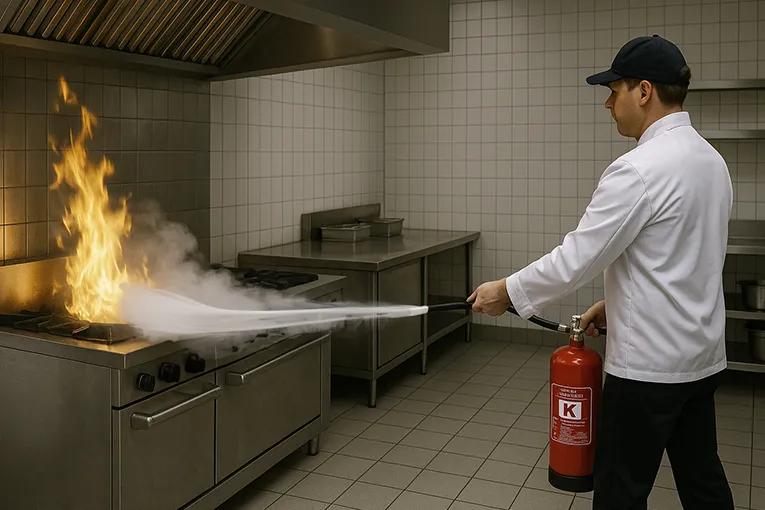
A Class K fire extinguisher is used for extinguishing fires involving cooking oils, animal fats, and grease common in commercial kitchens. These extinguishers use a wet chemical agent that cools and smothers grease fires, unlike standard ABC extinguishers. Restaurant kitchens across Central and Eastern Pennsylvania and Western Maryland rely on them to meet fire code requirements. This guide explains how Class K extinguishers work and what commercial kitchen operators need to know.
Key Takeaways
- A Class K fire extinguisher is designed specifically for cooking oil and grease fires in commercial kitchens.
- Wet chemical agents cool grease fires and create a soapy barrier that prevents reignition.
- Standard ABC extinguishers cannot safely handle high-heat, deep fryer, or grease-based cooking fires.
- Pennsylvania and Maryland commercial kitchens typically need scheduled inspections to stay code compliant year-round.
How Class K Fire Extinguishers Protect Pennsylvania Commercial Kitchens
Class K fire extinguishers are designed specifically for the unique fire hazards found in commercial cooking environments. Understanding how they work and where they should be used helps restaurant operators improve kitchen safety and support fire code compliance.
Protects Commercial Kitchens From High-Temperature Grease Fires
A Class K fire extinguisher is used for fires involving combustible cooking oils and animal fats found in commercial kitchen equipment. These fires burn hotter than typical combustible fires. Deep fryers, griddles, and range hoods in restaurant kitchens create the conditions where this extinguisher class becomes necessary equipment, not an optional add-on.
Stops Grease Fires Before They Can Reignite
A Class K wet chemical fire extinguisher contains a potassium acetate-based agent. This agent reacts with hot cooking oil through saponification, a chemical process that forms a soapy, foam-like layer over the fuel surface. That layer blocks oxygen and stops the fire from reigniting after the flame is out.
Reduces the Risk of Spreading Burning Grease
Standard ABC extinguishers use dry chemical agents that are not designed for high-temperature grease fires. Spraying a dry chemical agent on burning oil can splash hot grease and spread flames. A Class K grease fire extinguisher applies its agent as a fine mist, reducing splash risk and cooling the fire more effectively.
Provides Targeted Protection for Commercial Cooking Hazards
Unlike multipurpose fire extinguishers, a Class K extinguisher is engineered specifically for commercial cooking environments where hot oils and fats present unique fire risks. While some units are also rated for Class A fires, they should not be relied on for Class B or electrical fires. Using the correct extinguisher for each hazard helps improve kitchen safety and supports fire code compliance.
Keeps Mobile Commercial Kitchens Protected
Food truck kitchens face the same grease fire risks as full-service restaurants, often in a smaller footprint. A Class K fire extinguisher for food truck use must still meet UL listing requirements for wet chemical suppression. Limited space makes proper extinguisher placement and mounting especially important for quick access during an emergency.
Matches Fire Protection to the Size of the Kitchen
Class K extinguishers commonly come in 6-liter and 21-liter capacities. A 6-liter Class K fire extinguisher suits smaller kitchens, food trucks, or supplemental coverage near a single fryer station. Larger kitchens with multiple cooking appliances often require the larger capacity to maintain adequate coverage across the hazard area.
Helps Staff Identify the Correct Fire Extinguisher Quickly
The Class K fire extinguisher symbol appears on the extinguisher label and typically shows a black letter K inside a yellow or black geometric shape. Facilities managers can use this symbol during walkthroughs to confirm the correct extinguisher type is mounted in kitchen and cooking areas before an inspection.
Key Inspection and Compliance Priorities for Restaurant Kitchen Safety
Installing the correct extinguisher is only one part of maintaining a safe commercial kitchen. Regular inspections, proper placement, and ongoing staff training help ensure Class K extinguishers remain ready for use and compliant with applicable fire safety requirements.
Keep Class K Extinguishers Ready for an Emergency
Commercial kitchen fire extinguishers, including Class K units, generally require a monthly visual check and an annual professional inspection. NFPA 10 outlines these intervals for portable fire extinguishers in commercial occupancies. Facilities managers who track inspection dates on a visible tag can more easily confirm compliance during an AHJ visit.
Coordinate Class K Extinguishers With Kitchen Suppression Systems
Class K extinguishers work alongside, not instead of, a commercial kitchen fire suppression system installed over cooking equipment. The suppression system activates automatically to shut down fuel and discharge agents onto the hazard. The portable Class K extinguisher gives kitchen staff a secondary tool for flare-ups the system may not fully address.
Position Class K Extinguishers for Quick Access
Fire code generally requires a Class K extinguisher be mounted within 30 feet of travel distance from cooking equipment. Placement near an exit path, rather than directly beside a fryer, helps staff retrieve it safely during an active fire. Facilities managers should confirm mounting height and signage meet local fire marshal expectations.
Maintain Inspection Records and Service Documentation
Inspection tags, service records, and hydrostatic test dates are common documentation items a Pennsylvania or Maryland fire marshal will review during a kitchen inspection. Missing or expired tags are a frequent citation cause. Keeping a centralized log across multiple kitchen locations makes it easier to respond quickly to an inspection request.
Train Kitchen Staff to Use Class K Extinguishers Properly
Kitchen staff benefits from basic training on when and how to use a Class K fire extinguisher safely. Improper use, such as discharging too close to the fire surface, can splash burning oil. Operations managers overseeing multiple restaurant locations often build this training into new hire onboarding for kitchen staff.
Adjust Inspection Schedules During Busy Seasons
Summer months bring higher kitchen output for restaurants supporting outdoor dining, catering, and food truck events across Central and Eastern Pennsylvania. Increased fryer and grill use raises the chance of grease buildup in hoods and filters. Facility managers should confirm Class K extinguisher inspections align with these higher-use periods.
Track Compliance Across Multiple Restaurant Locations
Property managers overseeing several restaurant tenants face the added challenge of tracking extinguisher compliance across each unit. A missed inspection at one location can create liability exposure for the entire property. Centralized scheduling and documentation across all Central and Eastern Pennsylvania and Western Maryland sites reduces this risk.
Talk to a Fire Safety Specialist About Kitchen Fire Protection
Commercial kitchens across Central and Eastern Pennsylvania and Western Maryland depend on properly maintained Class K fire extinguishers to protect staff and stay code compliant. Liberty Fire Solutions offers inspection, repair, and installation services for kitchen fire extinguishers and suppression systems. Contact us to schedule a kitchen fire safety inspection or request a quote for your commercial kitchen.
Frequently Asked Questions
What is a Type K fire extinguisher?
A Type K fire extinguisher is another name for a Class K extinguisher, designed for cooking oil and grease fires. It uses a wet chemical agent to cool the fire and prevent reignition in commercial kitchens.
What is the best extinguisher for a Class K fire?
A Class K wet chemical extinguisher is the correct choice for cooking oil and grease fires. Its potassium acetate-based agent creates a cooling, soapy barrier that standard dry chemical extinguishers cannot safely provide.
Are Class K extinguishers safe for home use?
Class K extinguishers are built for commercial kitchen equipment like deep fryers, though some smaller models are marketed for home kitchens. Homeowners should confirm the extinguisher is UL listed for cooking oil fires before purchase.
What is the difference between Class B and Class K fire?
Class B fires involve flammable liquids like gasoline or solvents, while Class K fires involve cooking oils and animal fats reaching high temperatures. Each requires a different extinguishing agent matched to its specific fuel source.
Category: Fire Extinguishers Let us help.
Fill out the form and a Liberty fire safety specialist will contact you within 24 hours.
Let us help.
Fill out the form and a Liberty fire safety specialist will contact you within 24 hours.